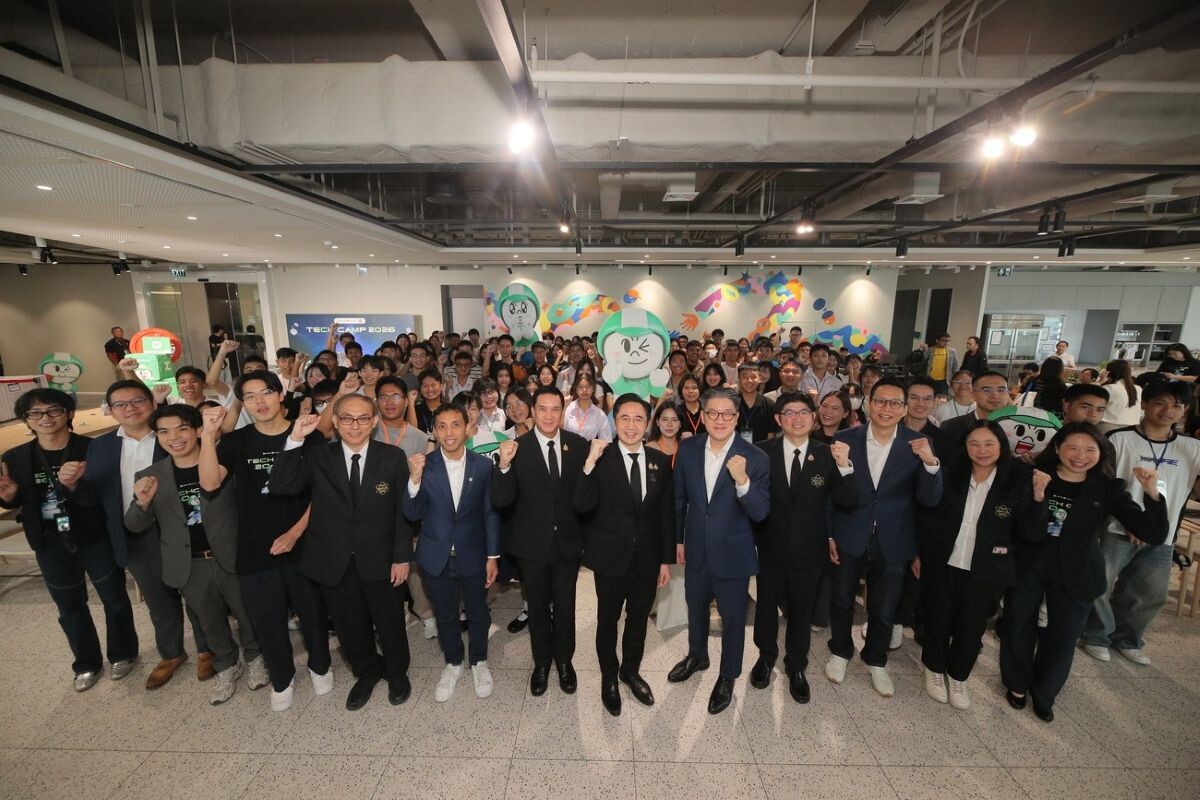
The Ministry of Higher Education, Science, Research and Innovation (MHESI), in collaboration with LINE MAN Wongnai and the Institute for the Promotion of Teaching Science and Technology (IPST), has launched the “AI Thinking Framework” learning guide at LINE MAN Wongnai Tech Camp 2026. The initiative aims to align youth skills with modern labor market demands and is available to the Thai public for free.
Prof. Dr. Yodchanan Wongsawat, Deputy Prime Minister and Minister of MHESI, stated that the camp focuses on practical AI application alongside creative thinking. Participants learn directly from AI and startup experts. MHESI plans to expand support for Deep Tech Startups by building foundational knowledge, attracting talent, offering appropriate incentives, and allowing state-scholarship recipients to fulfill their service obligations in private sector tech firms.
MHESI aims to leverage AI to boost productivity and drive new economic growth in key industries, including agriculture and food, healthcare and telemedicine, manufacturing and robotics, and space technology. The ministry targets upgrading AI Literacy for 20 million Thai citizens across various professions.
Yod Chinsupakul, CEO of LINE MAN Wongnai, noted that AI competency has become a global hiring standard. The key challenge in educational reform is embedding an “AI Thinking” mindset to bridge the gap between classroom learning and industry requirements. LINE MAN Wongnai developed the “AI Thinking Framework” from its internal AI Hackathons and real-world operations to strengthen Thailand’s talent ecosystem.
Now in its third year, LINE MAN Wongnai Tech Camp 2026 focuses on building AI Thinking skills for over 100 high school students (Grades 9–12), guided by tech executives and engineers from LINE MAN Wongnai.
LINE MAN Wongnai outlined the 3 core principles of the AI Thinking Framework:
- Know when to use and not use AI, understanding its strengths and limitations.
- Think before asking AI by assessing existing knowledge to ask precise questions.
- Seek understanding, not just answers, using AI as a thought partner to enhance personal capabilities.
Students in the program apply this framework to three real-world use cases: AI rider document verification, personalized marketing messaging for restaurants, and intelligent Q&A assistant development.
–Qingdao Debuts First ‘6S Robot Store,’ Pushing Smart Technology into Daily Life Applications