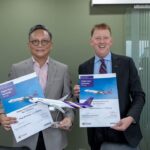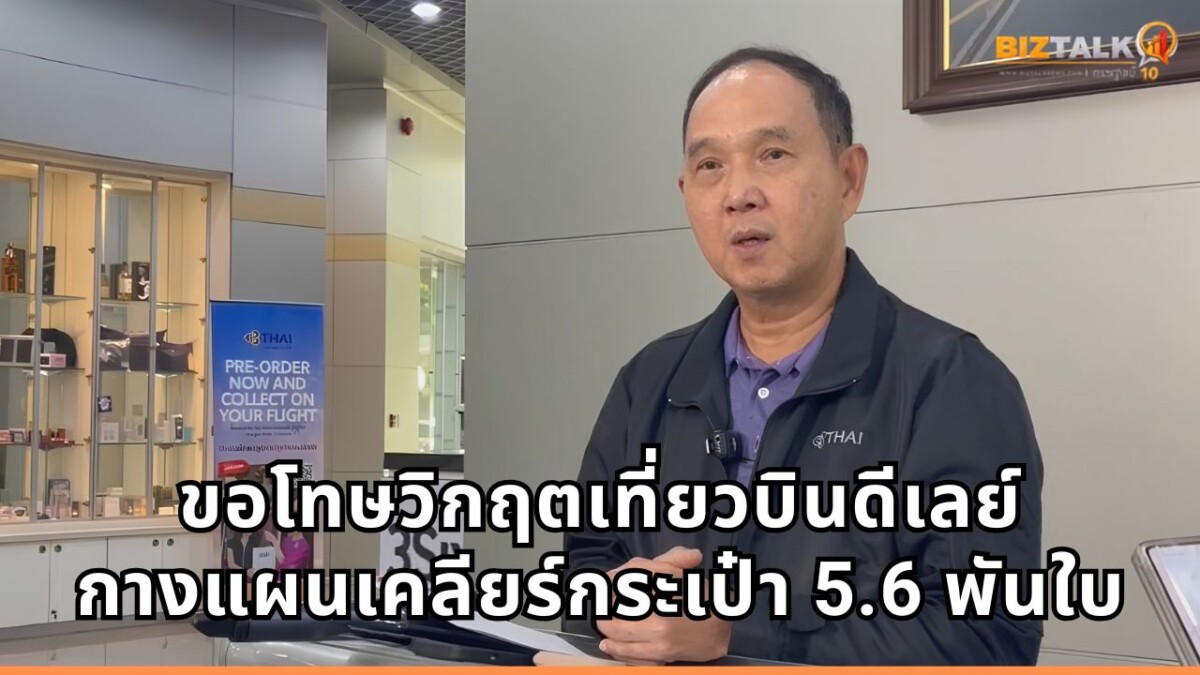
Chai Eamsiri, Chief Executive Officer of Thai Airways International Public Company Limited (THAI), held an urgent press briefing addressing widespread flight disruptions and baggage backlog at Suvarnabhumi Airport, extending a formal apology to all affected passengers. The national carrier is taking swift operational measures by scaling down capacity, cancelling and consolidating flights, transferring passengers to partner airlines, and bringing in third-party ground handlers to relieve ramp congestion.
Bangkok outbound flights, which normally average over 110 per day, have been cut by more than 30 flights—equivalent to a 30% to 40% capacity reduction—aimed at stabilizing schedules and restoring on-time performance.
Chai acknowledged that flight delays reached nearly 100% over the past three days, affecting over 300 departures or approximately 600 round-trip sectors. The disruption impacted Thai Airways more severely than foreign carriers because Bangkok serves as its main operational home base, requiring complete ground, cargo, and passenger servicing on site, whereas turnaround carriers perform minimal servicing locally before departing.
To address an estimated backlog of 5,600 pieces of luggage, ground teams have segregated stranded bags from arriving baggage flows and transferred them to public terminal areas for streamlined passenger collection. The operation is supported by the Airports of Thailand (AOT) alongside approximately 100 personnel deployed from the Royal Thai Air Force and the Ministry of Defence to assist cargo management and baggage staging. Stranded bags are sorted by date and flight, with staff guiding passengers through baggage tag verification. The airline targets a full “set zero” resolution within 72 hours, publishing real-time flight lists for baggage pickup via its official Facebook page and website, while deploying Thailand Post and two other logistics providers to deliver baggage directly to passengers’ addresses.
Regarding ground operations, Chai explained that frontline crews faced severe fatigue after working non-stop for three consecutive days. The airline has deployed corporate back-office staff to bolster terminal operations, introduced work incentives, and dispatched senior managers on site to support staff return-to-work efforts. The frontline shortage surpassed emergency forecasts: operational manpower plummeted from regular levels of over 500 staff to just over 200, leaving a shortfall of around 300 personnel that military support could only partially absorb. A critical bottleneck also emerged in technical roles, with available loadmasters falling from 45 to roughly 20 personnel.
To assist travelers, Thai Airways is setting up dedicated compensation desks inside and outside passenger terminals, scheduled to open this afternoon, to process standardized compensation claims for delayed flights and baggage.
Chai firmly dismissed social media rumors attributing the disruptions to an internal strike or contractor protest, emphasizing that employees acted without malicious intent and that the crisis stemmed purely from unexpected operational overloads and severe frontline staffing deficits. Regarding the transport ministry’s suggestion to convene an emergency board meeting,
Chai noted that board members are updated regularly, clarifying that policy and corporate backing remain fully committed, while the primary bottleneck remains field-level workforce deployment. He concluded by reiterating his apology, noting that executive leadership has been stationed on site at Suvarnabhumi Airport around the clock for the past three days to resolve the disruption.
–Qualcomm and Apple Extend Global Patent Licensing Deal Effective April 2027