Ally Logistic Property (ALP), a Taiwan-based smart logistics infrastructure developer, has officially launched “OMEGA 1 Bangna,” its flagship automated mega-warehouse in Thailand. Marking ALP’s largest project across Asia, the facility introduces an innovative operational model that transforms static physical infrastructure into an adaptable, software-driven ecosystem designed to tackle persistent labor shortages, rising inflation, and volatile supply chain shifts.
Charlie Chang, Co-Founder and Chief Executive Officer of ALP., stated that modern commerce has transformed dramatically over the past two decades. End-consumer transactions are now defined by smaller orders, faster turnaround requirements, and higher return frequencies. While the digital frontend of commerce has become instantaneous and friction-free, traditional warehouses have remained functionally stagnant for the last 40 years, relying on rigid structures designed for a slower, predictable era.
To bridge this operational divide, ALP fundamentally re-engineered warehouse development. Instead of acquiring land and erecting an empty shell to fit operations later, ALP designs the building around the exact velocity, volume, and operational variability of goods.
The core architecture of OMEGA integrates property, automation, operation, and data into a unified, shared platform structured across three interconnected operational layers:
The central layer features an Automated Storage and Retrieval System (ASRS) reaching a height of 40 meters. This vertical layout maximizes storage density, cuts down internal transit distances, and fundamentally shifts the economics of commercial land use compared to conventional 10-to-14-meter facilities.
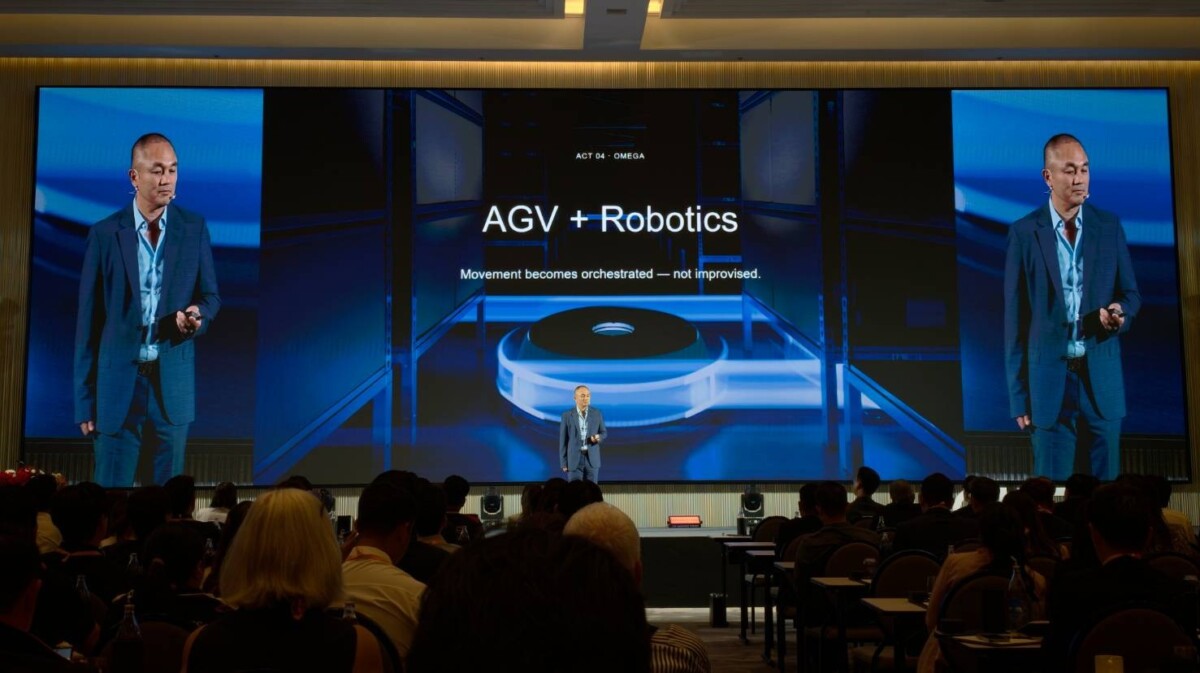
The second layer comprises automated guided vehicles (AGVs) and specialized robotic systems that automate repetitive physical handling, ensuring consistent, high-speed cargo movement.
The third layer is driven by ALP OS, an proprietary operating software that coordinates inventory, task distribution, hardware, and dynamic exceptions in real time. The integration allows the facility to maintain non-stop 24/7 operations, eliminating downtime related to labor supply limits or wage fluctuations.
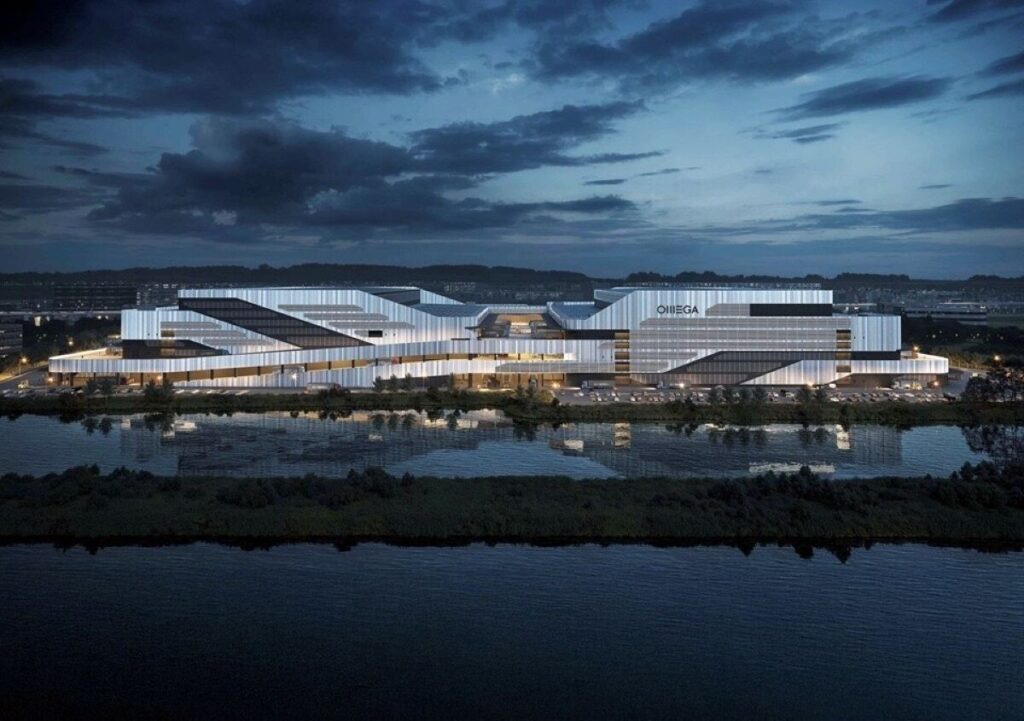
OMEGA 1 Bangna represents ALP’s largest single investment to date—doubling the scale of its operating assets in Taiwan and Malaysia, and twice the size of its upcoming development in Singapore. The Bangna facility features 67 ASRS cranes and is engineered to deploy hundreds to thousands of automated vehicles, supported by a 24/7 on-site technical maintenance team. The machinery deployed adheres to the highest operational standards, matching the hardware reliability benchmarks utilized by global manufacturing leaders such as TSMC, ensuring an uptime rate of 99.99%.
The facility will roll out in three phases: Phase 1 opens at the end of this month, Phase 2 is scheduled for Q1 next year, and Phase 3 will begin operations by mid-next year.
OMEGA 1 Bangna eliminates the typical 3-to-6-year timeframe and hefty capital expenditures required to construct built-to-suit automated facilities. Instead, clients can enter a shared infrastructure ecosystem. Storage is offered on a pay-per-pallet-position basis via the 40-meter ASRS, while surrounding floor spaces are leased on a square-meter model for tailored handling and picking. Companies can seamlessly integrate their existing Warehouse Management Systems (WMS) with ALP OS via API within 2 to 3 weeks—a process that traditionally spans 3 to 6 months. Advanced digital twin modeling, predictive simulation tools, and real-time mobile tracking dashboards are also provided directly to users.
Addressing the decision to expand into Thailand, Chang emphasized that Thailand stands as a vital manufacturing powerhouse in Southeast Asia. While production plants have adopted widespread automation, regional warehousing operations remain predominantly labor-intensive. With escalating labor challenges and shifting supply chain demands across global markets, ALP views Thailand as a prime strategic landscape for next-generation logistics transformation.
ALP has outlined a 20-to-40-year commitment to Thailand, intending to build new OMEGA facilities every 1 to 1.5 years to reach 5 to 10 hubs nationwide. This network expansion aims to support industries ranging from fast-moving consumer goods (FMCG) and retail to cold chain and pharmaceuticals, establishing Thailand as a regional benchmark for automated logistics capabilities.
–PETRONAS LNG Strengthens Regional Energy Resilience at Gastech 2026 as Southeast Asian Demand Surges