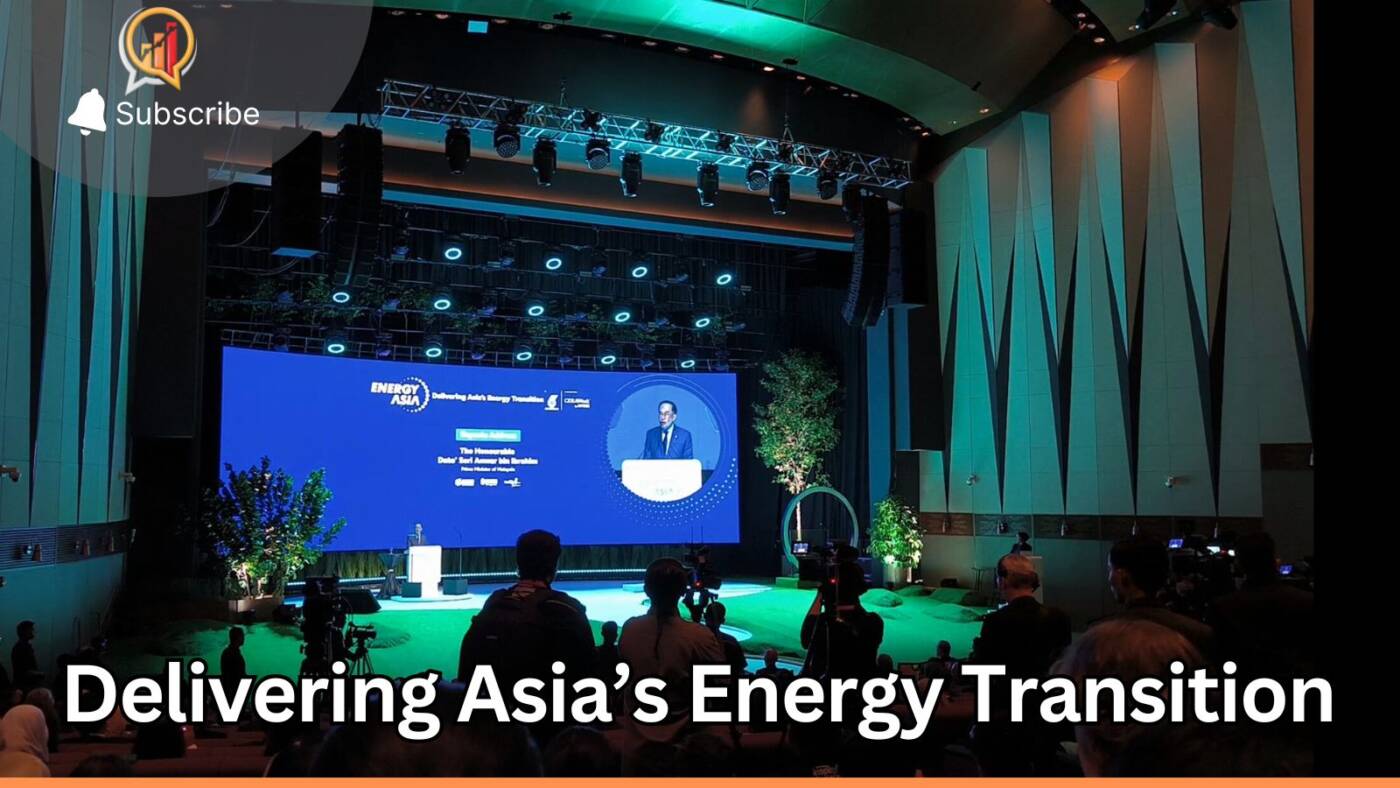
Malaysian Prime Minister Anwar Ibrahim officially opened the Energy Asia 2025 in Kuala Lumpur, themed “Delivering Asia’s Energy Transition.” He underscored the critical importance of collaborative efforts to drive systemic change towards sustainability in Asia’s energy sector, navigating a global landscape grappling with the challenges of a “post-globalized world.”
Prime Minister Anwar highlighted the evolving global dynamic, shifting from complex interdependence to a strained environment marked by rising protectionism and nationalism. This shift has fueled geopolitical tensions, retaliatory tariffs, and disrupted supply chains, eroding the predictability and reliability of global trade systems, particularly in the energy and climate domains, where genuine collaboration remains elusive.
Despite these challenges, the Prime Minister reaffirmed Asia’s steadfast commitment to diplomacy over autocracy and the coexistence of healthy competition with mutually beneficial outcomes. This ethos is reflected in the ASEAN 2025 vision, which aims to strengthen regional centrality and cohesion amidst increasing protectionism and geopolitical shifts.
The recent 46th ASEAN Summit in Kuala Lumpur saw all ten member states reaffirm their dedication to inclusive progress and cooperation through the Kuala Lumpur Declaration on ASEAN 2045. Additionally, the inaugural ASEAN-GCC-China Summit, a landmark event, fostered goodwill and trust among key regional blocs, further bolstering regional integration in today’s complex multipolar world.
Prime Minister Anwar noted that energy demand in the Asia Pacific surged in 2024, accounting for 50% of global consumption, with the region also contributing 60% of global emissions. Despite accelerating growth, the commitment to climate action remains resolute. In Southeast Asia, eight out of ten countries have set net-zero targets, and at COP28, ASEAN member states pledged to triple global renewable energy capacity to 11,000 GW by 2030.
Malaysia, for its part, launched the National Energy Transition Roadmap (NETR) in 2023 to align public and private efforts in achieving its Nationally Determined Contributions and building energy resilience.
The Prime Minister outlined three crucial pillars for delivering a just and equitable energy transition for Asia:
- Defining a Clear Financial Architecture: This is essential to inspire investor confidence and mobilize greater capital flows into renewable energy projects across the region. In 2023, Southeast Asia attracted only 2% of global clean energy spending, a stark contrast to its immense potential in renewable energy, such as wind in Vietnam, hydropower in Laos, solar in Malaysia, and geothermal energy in Indonesia. Malaysia is addressing this gap through policies like the Corporate Renewable Energy Supply Scheme (CRESS) and incentives like the Green Technology Financing Scheme.
- Upgrading Electricity Grids: At the recent ASEAN Summit, a significant step was taken to accelerate the ASEAN Power Grid (APG) initiative through an enhanced memorandum of agreement and the establishment of a dedicated APG financing facility network. This will enhance cross-border funding flows and move the region closer to a truly integrated energy market. In Malaysia, Tenaga Nasional Berhad has committed RM43 billion to upgrade its national grid infrastructure, incorporating AI and battery energy storage systems for greater resilience and flexibility.
- Investing in Efficiency and Emissions Reduction within Existing Energy Systems: While fossil fuels still account for nearly 80% of global supply, this transition must be anchored in equity. Decarbonization efforts that disregard the needs of the poor and vulnerable risk deepening inequality. Ensuring universal access to affordable, reliable energy is not just a moral imperative but foundational to a just energy transition. Energy security must therefore encompass social justice and inclusive access.
Prime Minister Anwar emphasized that for Asia, energy security remains a prerequisite for progress. As the region prepares for its economic renaissance, the path to net-zero must acknowledge that renewable energy can be complemented by emissions-abated oil and gas. This balanced approach ensures affordable energy access, crucial for raising living standards.
ASEAN has already laid the groundwork for this pragmatic pathway through the ASEAN Carbon Capture and Storage (CCS) Deployment Framework and Roadmap, aimed at streamlining policies and facilitating the flow of capital and carbon across borders. Malaysia, earlier this year, passed the Carbon Capture, Utilisation and Storage Bill 2025 to provide a regulatory foundation for this emerging sector. PETRONAS is leading the charge with plans to develop three CCS hubs in offshore waters, serving both the oil and gas sector and other hard-to-abate industries.
Malaysia’s CCS efforts involve over 10 international partners from Japan, South Korea, and global energy firms such as Total and Shell. PETRONAS is also collaborating with ENEOS, Mitsubishi, and JX Nippon to explore the transportation and storage of CO₂ from the Tokyo Bay area to Malaysia, positioning CCS as both a vital decarbonization tool and a promising new revenue stream for the region.
The Prime Minister concluded by expressing his anticipation that the diverse expertise of the conference participants will contribute practical solutions and pragmatic initiatives to deliver Asia’s energy transition