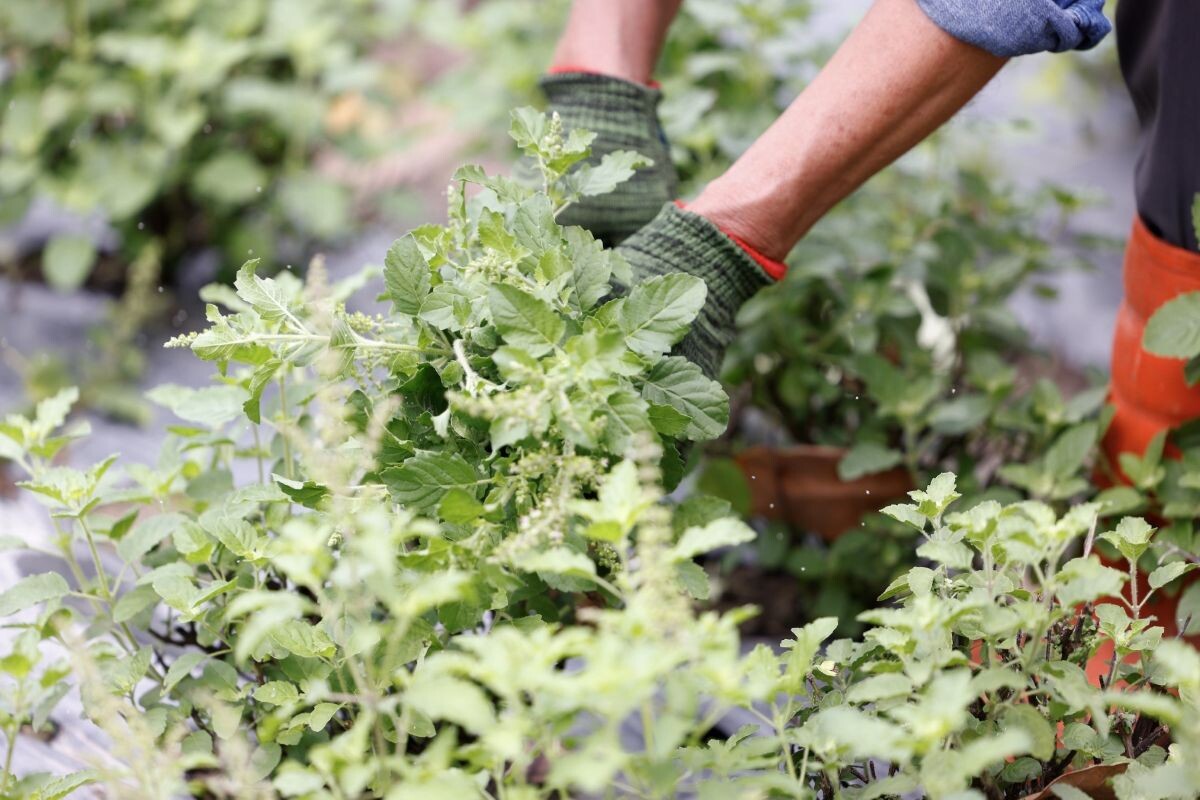
CPRAM Co., Ltd. is celebrating the 19th anniversary of its “Life Partner Farmer” initiative, highlighting breakthroughs in holy basil research designed to enhance ingredient quality, add value to Thai agricultural produce, and ensure full traceability at every stage of production. Driven by CPRAM’s Food 3S framework (Food Safety, Food Security, and Food Sustainability) and Charoen Pokphand Group’s Three Benefit Principle, the project prioritizes long-term value for the nation, the people, and the organization.
For nearly two decades, the Life Partner Farmer project has moved beyond direct sourcing to comprehensively empower local growers while maintaining the consistent quality of ready-to-eat holy basil meals. The initiative operates on three core pillars:
- Knowledge: Through the CPRAM Agricultural Learning Center, the company transfers modern agricultural technology and cultivation techniques, covering soil preparation, planting, crop management, and harvesting under Good Agricultural Practices (GAP). It also introduces high-value plant varieties to help farmers overcome cultivation challenges and meet market demands.
- Financial Support: CPRAM enhances farm efficiency by providing essential infrastructure, including solar panel installations and water management systems. Additionally, the company has supplied holy basil seeds free of charge for over 19 years and plans to distribute additional seeds to support consistent yields in upcoming cycles.
- Market Access: CPRAM purchases holy basil directly from participating farmers at above-market prices based on quality standards, creating local employment through harvesting and sorting activities. With consumer demand and menu development continuously expanding, current supply falls short of demand, prompting CPRAM to encourage farmers to engage in value-added activities for higher and more stable incomes.
CPRAM emphasized that its holy basil breeding program is not intended to monopolize Thailand’s more than 300 native varieties or commercialize seeds for public sale. Instead, the research aims to ensure a year-round supply of safe, nutritious, and aromatic holy basil with a distinct spicy flavor suited for ready-to-eat food production. The improved variety is bred for climate resilience, faster growth, and consistent yields, bridging laboratory research with practical farm-to-table applications.
According to Kasetsart University, Kamphaeng Saen Campus, the newly developed holy basil variety has only a 0.001% chance of natural cross-pollination with conventional varieties. The new variety possesses four sets of chromosomes (4x) compared to two sets (2x) in conventional holy basil, and laboratory tests confirm that cross-breeding between the two fails to produce viable seeds, resulting only in shriveled seeds.
Meanwhile, data from the Department of Agriculture indicates that 107 plant species are currently eligible for protection under Thailand’s Plant Varieties Protection Act, A.D. 1999, with 1,108 new varieties registered (Kor Por 2) across government, academic, and private sectors. Before deploying the new holy basil variety, CPRAM conducted both laboratory evaluations and multi-location field trials in collaboration with universities and farmers. This tri-sector partnership ensures that agricultural innovation translates into real-world benefits, strengthening Thailand’s agricultural competitiveness while improving farmer livelihoods and consumer food quality.
–When AI Transforms Medicine: How Thailand Can Elevate Healthcare to the Global Stage